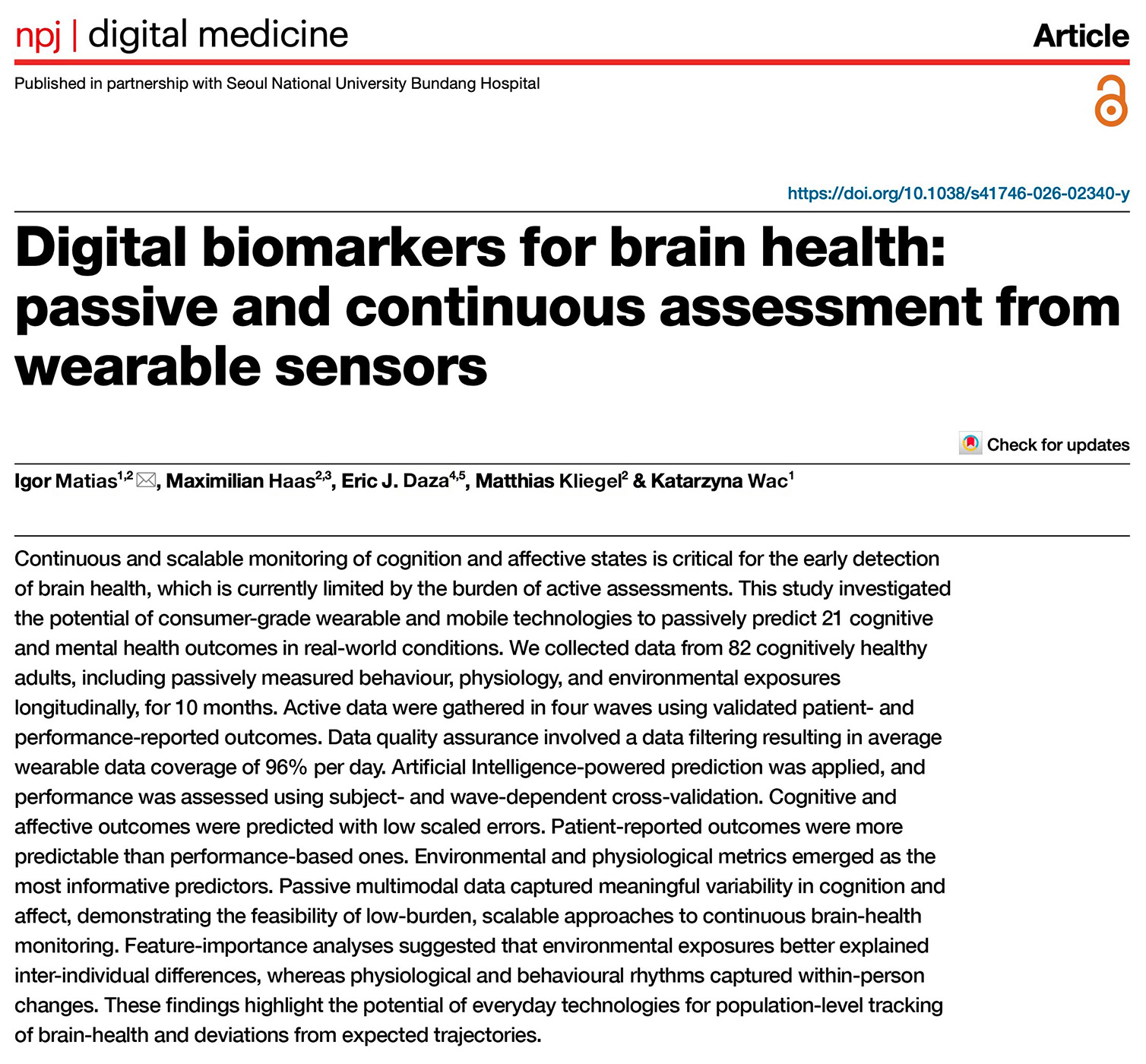
Providemus alz Project at CUI published in npj Digital Medicine advances Passive Monitoring of Brain Health
New findings from the Providemus alz project have been published in npj Digital Medicine (one of the most influential journals in digital health worldwide), reporting how passively collected data from everyday life can be used to monitor longitudinal changes in cognitive performance and emotional states. The study was led by Igor Matias, Ph.D. Candidate at the GSEM faculty, lead author of the publication and lead researcher of the Providemus alz project. The research was conducted at and co-funded by the Centre Universitaire d’Informatique (CUI) of the University of Geneva, in collaboration with partners in Switzerland and the United States.
Providemus Alz is a joint research initiative of the Quality of Life Technologies Lab (QoL Lab) and the Cognitive Aging Lab of the CIGEV (CAL-CIGEV). The project is carried out by an interdisciplinary team of researchers, including members affiliated with CUI, and brings together expertise in computer science, information systems, digital health, statistics, and brain-health research.
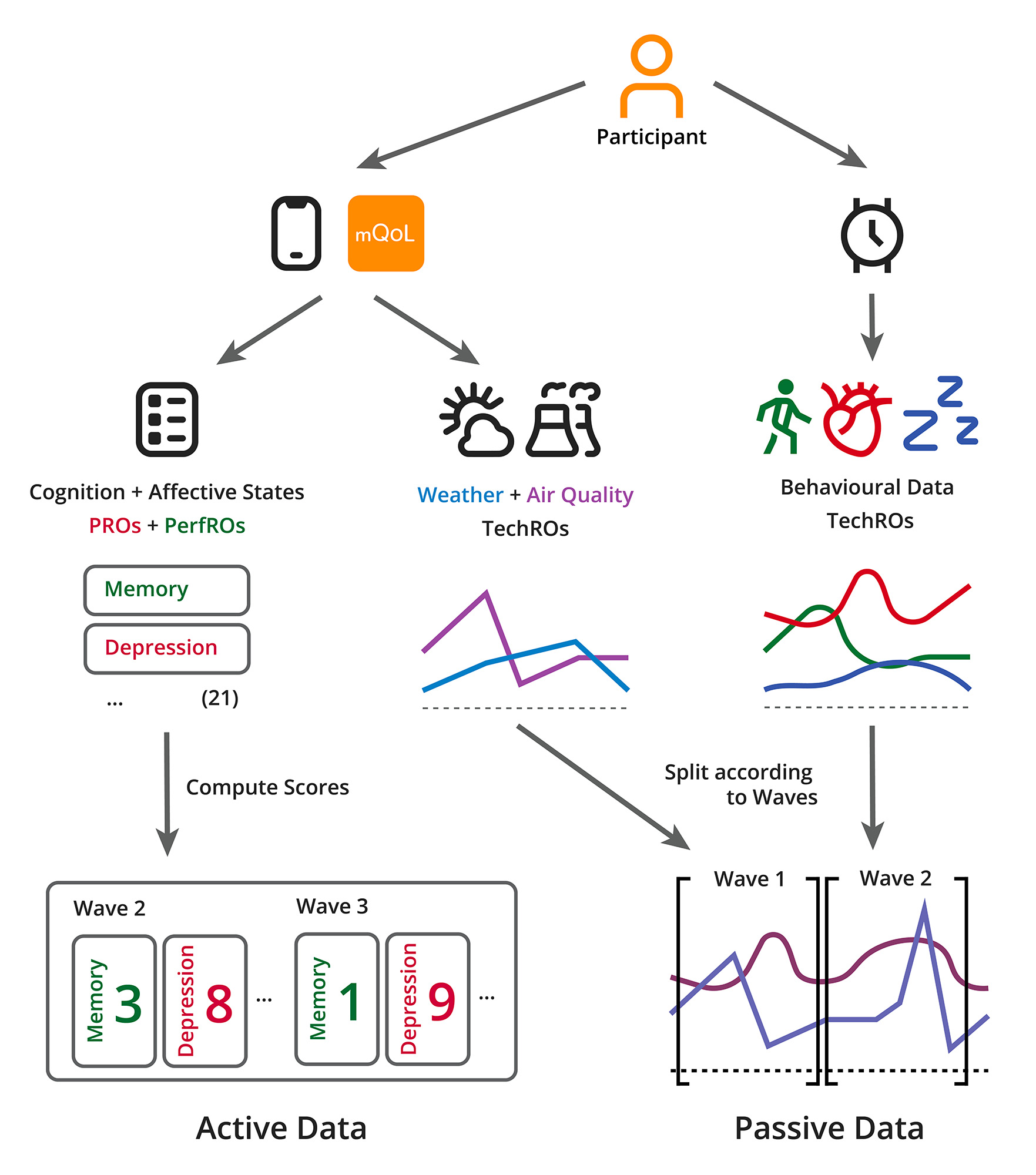
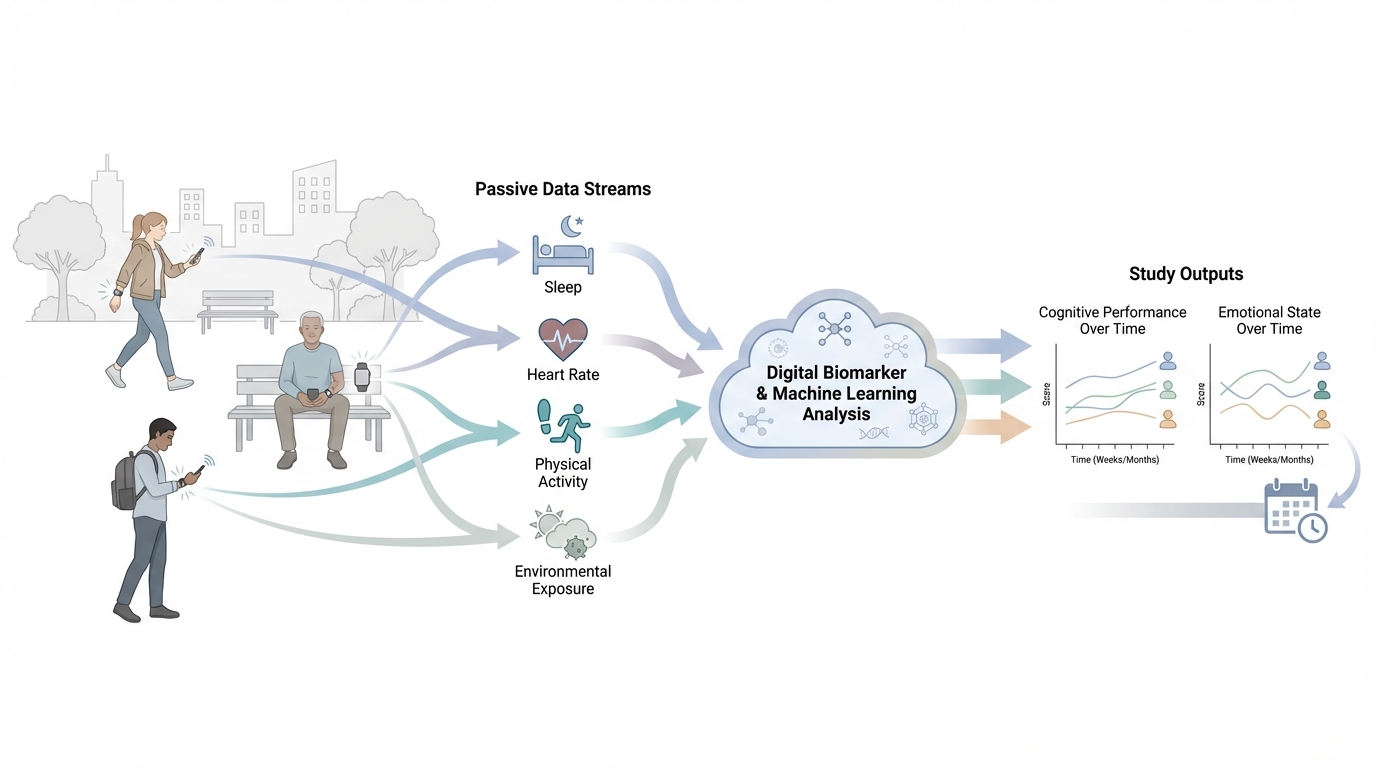
The project is fully remote and longitudinal, and is designed to investigate whether digital traces collected in real-world conditions can provide meaningful insights into brain health. It combines continuous data from consumer-grade wearable devices (such as sleep patterns, heart rate, physical activity, and environmental exposures) with repeated cognitive and mental-health assessments collected over extended periods.
The published results demonstrate that these passive signals are strongly associated with everyday cognitive functioning and emotional states, and that they can be used to estimate longitudinal changes with low prediction error. Importantly, this is achieved without requiring additional clinical visits or invasive procedures, allowing brain-health monitoring to take place in participants’ natural environments rather than in controlled laboratory or clinical settings.
Beyond the results themselves, the study stands out for its methodological approach. By integrating multimodal passive data with repeated cognitive outcomes in a real-life, longitudinal framework, Providemus alz moves beyond population-level averages and explicitly addresses individual variability, model limitations, and interpretability, key challenges for the responsible translation of digital health technologies into clinical practice.
Future research will build on these findings to develop more personalised and robust models, to better understand for whom and under which conditions digital biomarkers are most informative, and to further explore their role in preventive and precision approaches to brain health.
The success of Providemus alz relies on the long-term commitment of its participants and on close interdisciplinary collaboration, with CUI playing a central role in hosting, supporting, and co-funding the project, and in contributing researchers to the team driving this work forward.
Read the article: https://doi.org/10.1038/s41746-026-02340-y
More info: https://providemus.unige.ch/